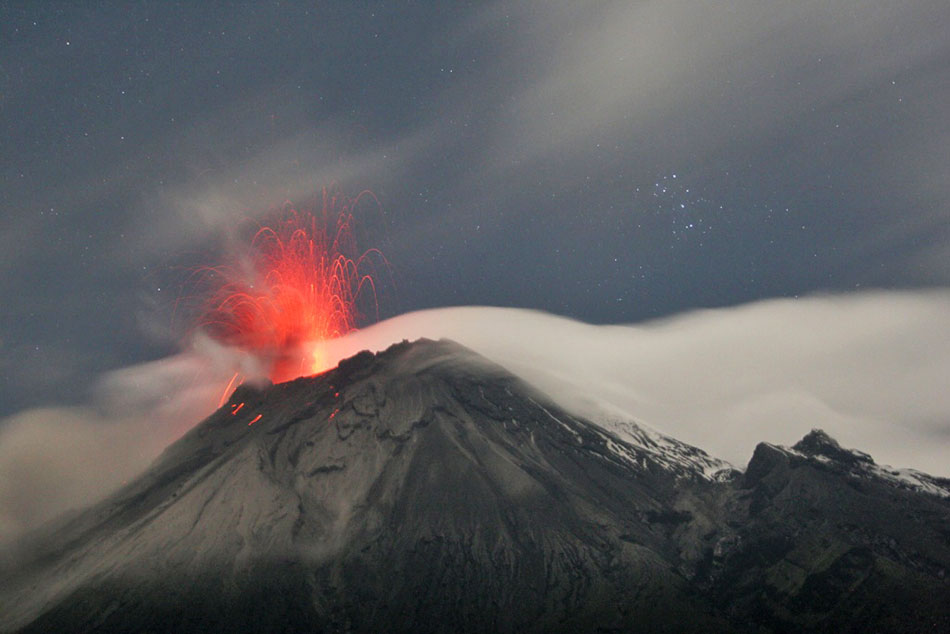
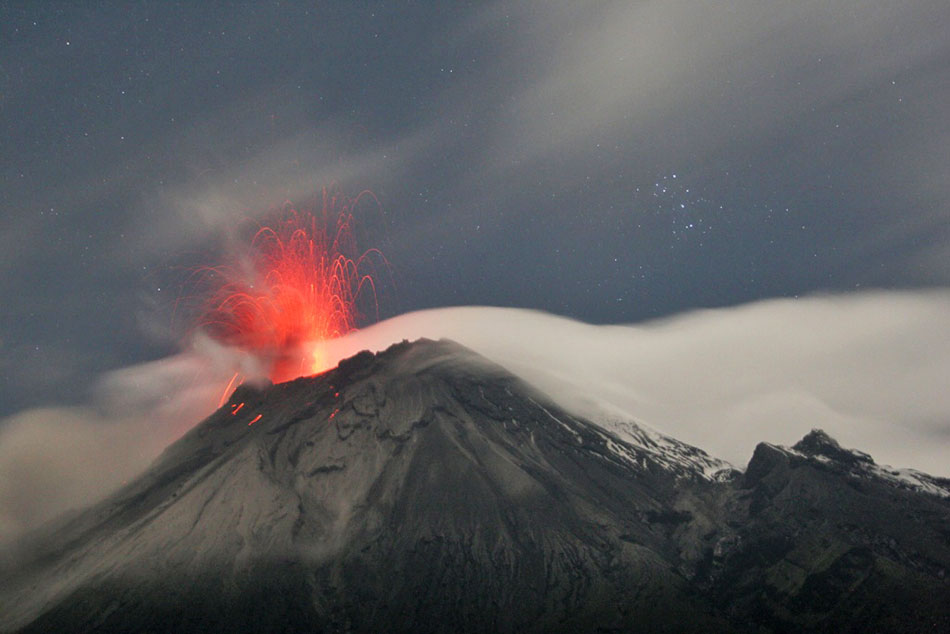
In fact, there are few forces of nature that rival their sheer, awesome might, or have left as big of impact on the human psyche.
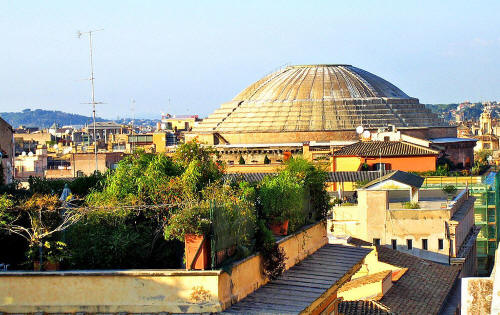
Who hasn't heard of tales of Mt. Vesuvius erupting and burying Pompeii?
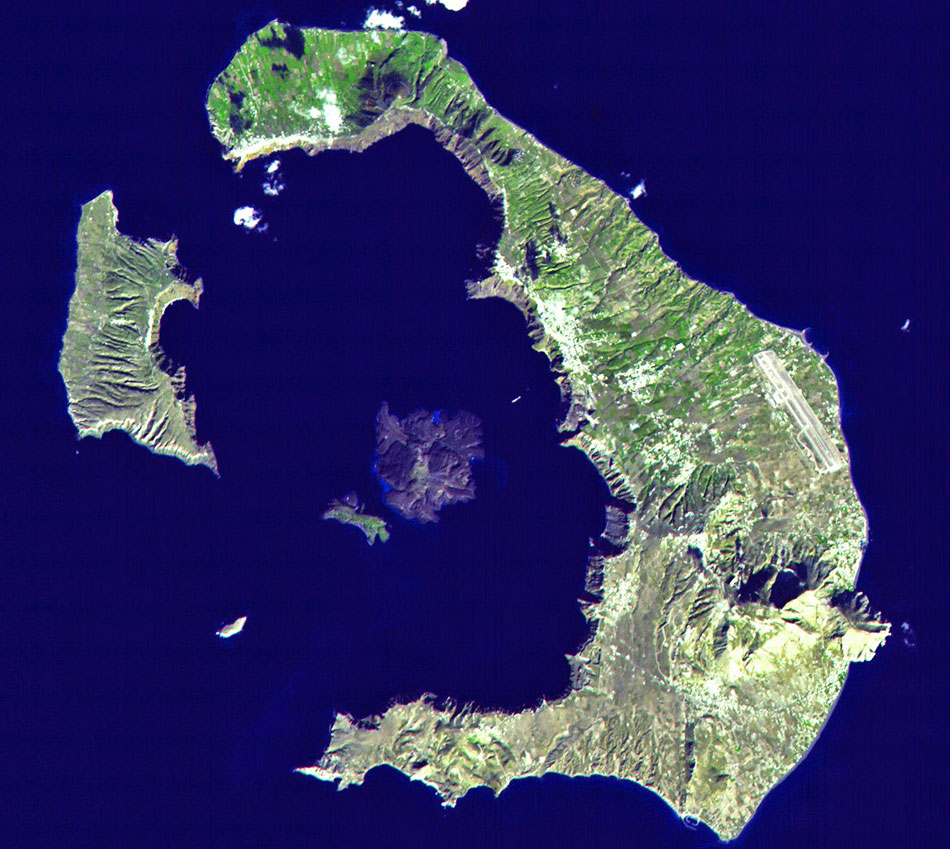
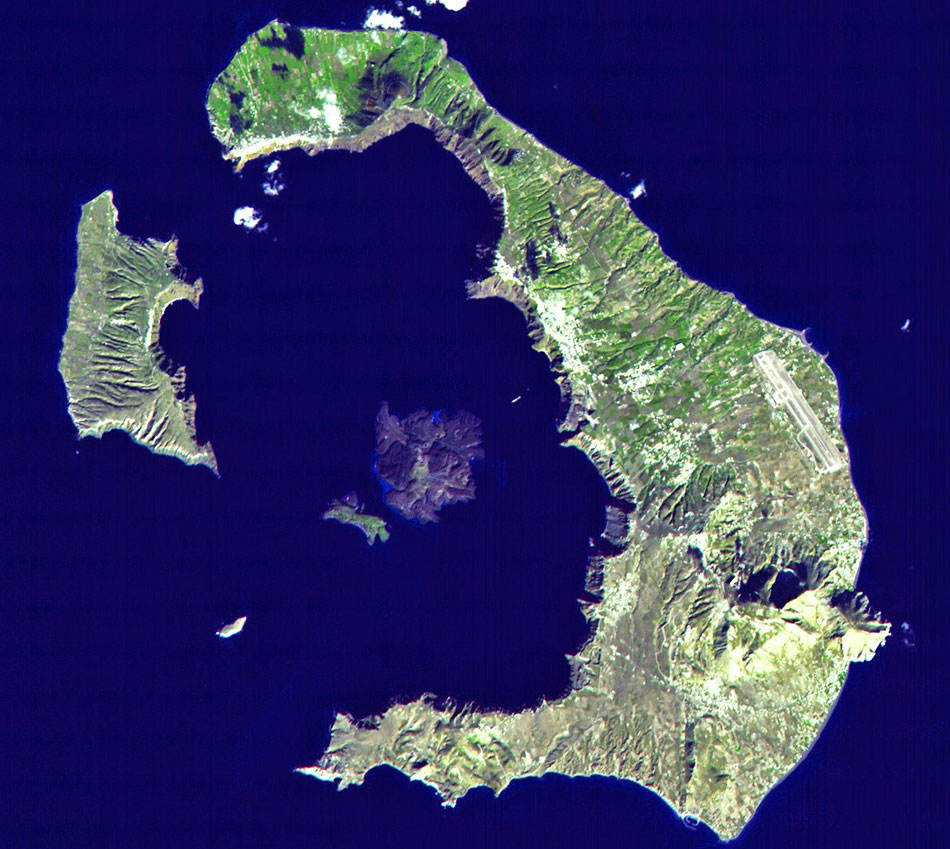
There's also the Minoan Eruption, the eruption that took place in the 2nd millennium BCE on the isle of Santorini and devastated the Minoan settlement there.
In:
Japan
Hawaii
South America
and all across the Pacific, there are countless instances of eruptions taking a terrible toll.
Volcanic eruptions result in ash being dispersed over wide areas around the eruption site.
And depending on the chemistry of the magma from which it erupted, this ash will be contain varying amounts of soil nutrients.
While the most abundant elements in magma are silica and oxygen, eruptions also result in the release of,
water
carbon dioxide (CO²)
sulfur dioxide (SO²)
hydrogen sulfide (H²S)
hydrogen chloride (HCl)
...amongst others.
In addition, eruptions release bits of rock such as,
potolivine
pyroxene
amphibole
feldspar
...which are in turn rich in:
iron
magnesium
potassium
As a result, regions that have large deposits of volcanic soil (i.e. mountain slopes and valleys near eruption sites) are quite fertile.
For example, most of Italy has poor soils that consist of limestone rock.
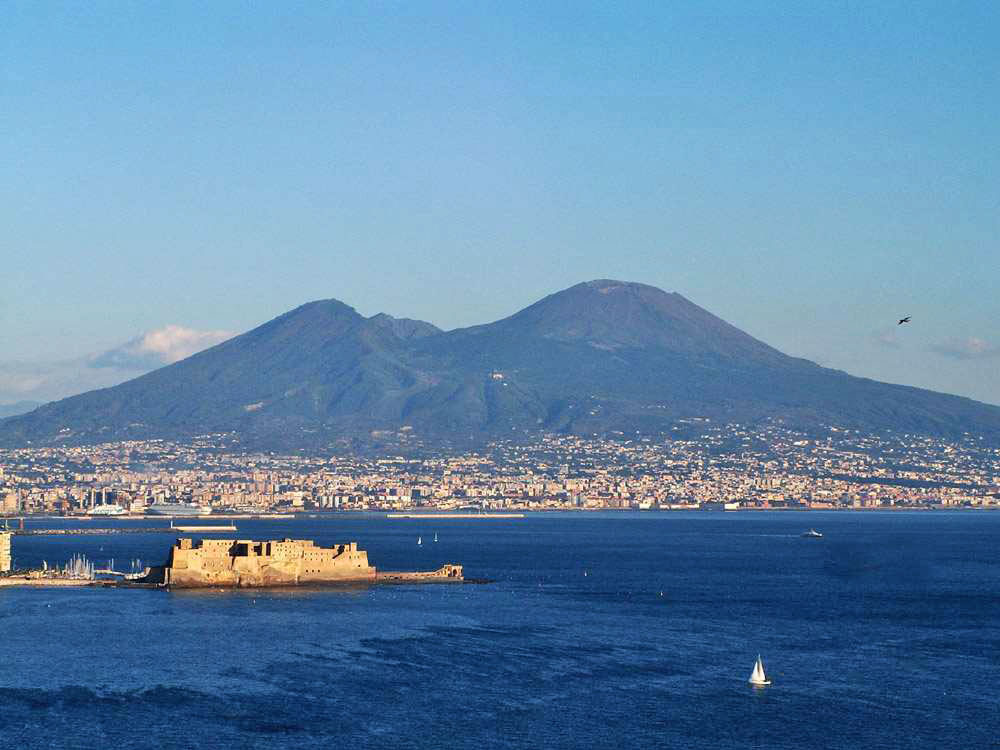
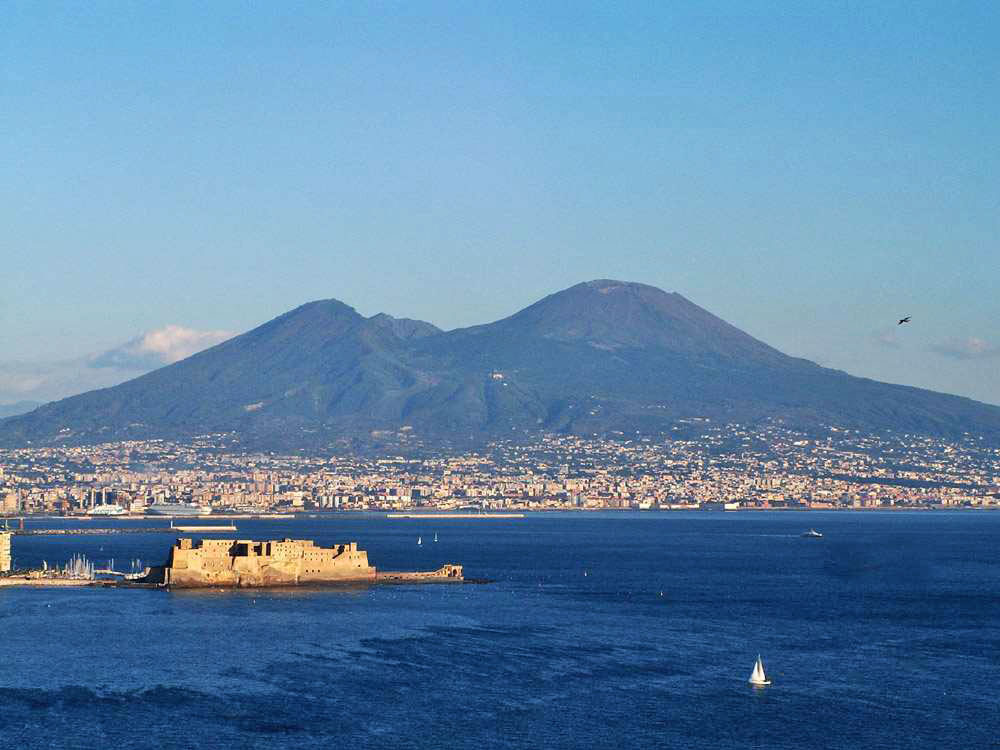
The area around the volcano is now densely populated. Credit: Wikipedia Commons/Jeffmatt
Download
But in the regions around Naples (the site of Mt. Vesuvius), there are fertile stretches of land that were created by volcanic eruptions that took place 35,000 and 12,000 years ago.
The soil in this region is rich because volcanic eruption deposit the necessary minerals, which are then weathered and broken down by rain.
Once absorbed into the soil, they become a steady supply of nutrients for plant life.
Hawaii is another location where volcanism led to rich soil, which in turn allowed for the emergence of thriving agricultural communities.
Between the 15th and 18th centuries on the islands of Kauai, O'ahu and Molokai, the cultivation of crops like taros and sweet potatoes allowed for the rise of powerful chiefdoms and the flowering of the culture we associate with Hawaii today.
In addition to scattering ash over large areas of land, volcanoes also push material to the surface that can result in the formation of new islands.
For example, the entire Hawaiian chain of islands was created by the constant eruptions of a single volcanic hot spot.
Over hundreds of thousands of years, these volcanoes breached the surface of the ocean becoming habitable islands, and rest stops during long sea journeys.
This is the case all across the Pacific, were island chains such as,
Micronesia
the Ryukyu Islands (between Taiwan and Japan)
the Aleutian Islands (off the coast of Alaska)
the Mariana Islands
Bismark Archipelago
...were all formed along arcs that are parallel and close to a boundary between two converging tectonic plates.
The island of Santorini, Greece. Credit: EOS/NASA/ Public Domain
Download
Much the same is true of the Mediterranean.
Along the Hellenic Arc (in the eastern Mediterranean), volcanic eruptions led to the creation of,
And in the Caribbean, volcanic activity led to the creation of the Antilles archipelago.
Where these islands formed, unique species of plants and animals evolved into new forms on these islands, creating balanced ecosystems and leading to new levels of biodiversity.
Volcanoes also play a vital role in periodically cooling off the planet.
When volcanic ash and compounds like sulfur dioxide are released into the atmosphere, it can reflect some of the Sun's rays back into space, thereby reducing the amount of heat energy absorbed by the atmosphere.
This process, known as "global dimming", therefore has a cooling effect on the planet.
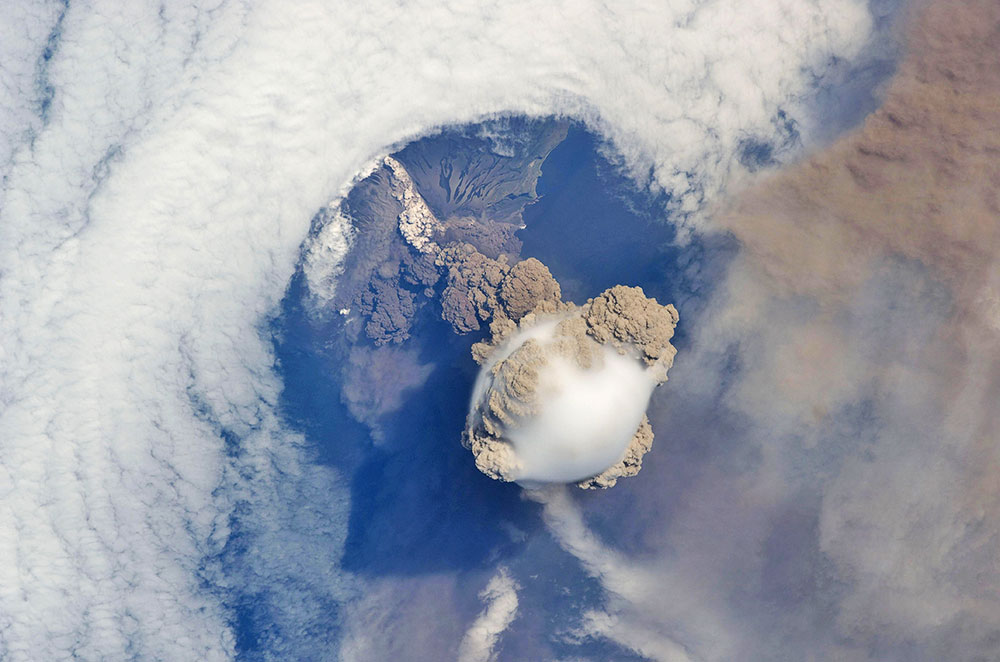
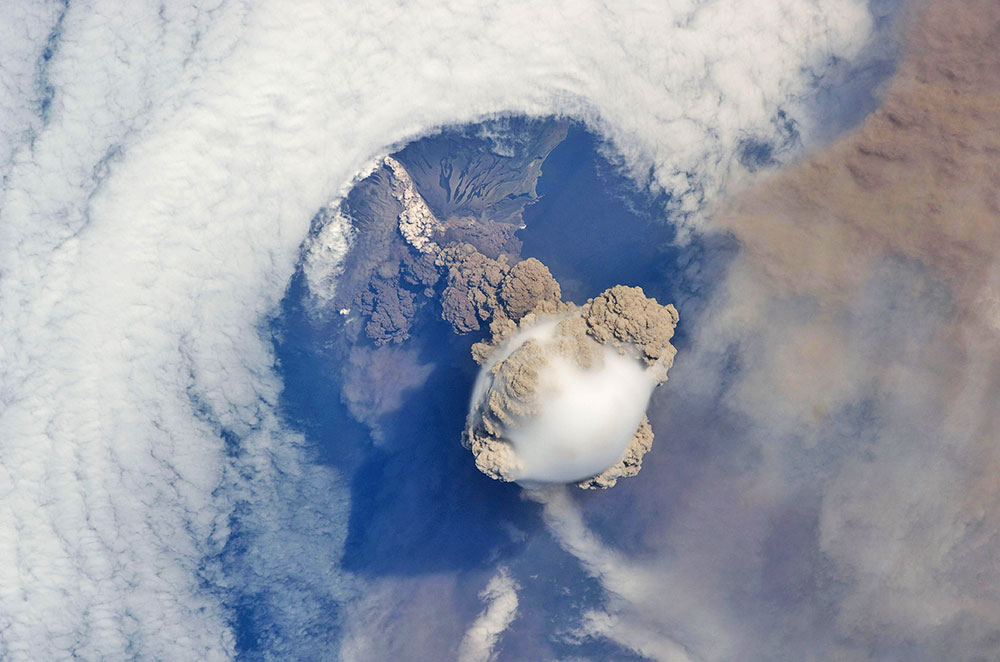
Sarychev volcano, (located in Russia's Kuril Islands, northeast of Japan) in an early stage of eruption on June 12, 2009. Credit: NASA
Download
The link between volcanic eruptions and global cooling has been the subject of scientific study for decades.
In that time, several dips have been observed in global temperatures after large eruptions.
And though most ash clouds dissipate quickly, the occasional prolonged period of cooler temperatures have been traced to particularly large eruptions.
Because of this well-established link, some scientists have recommended that sulfur dioxide and other be released into the atmosphere in order to combat global warming, a process which is known as 'ecological' engineering.
Another benefit of volcanism comes in the form of geothermal fields, which is an area of the Earth characterized by a relatively high heat flow.
These fields, which are the result of present, or fairly recent magmatic activity, come in two forms.
Low temperature fields (20-100°C) are due to hot rock below active faults, while high temperature fields (above 100°C) are associated with active volcanism.
Geothermal fields often create hot springs, geysers and boiling mud pools, which are often a popular destination for tourists.
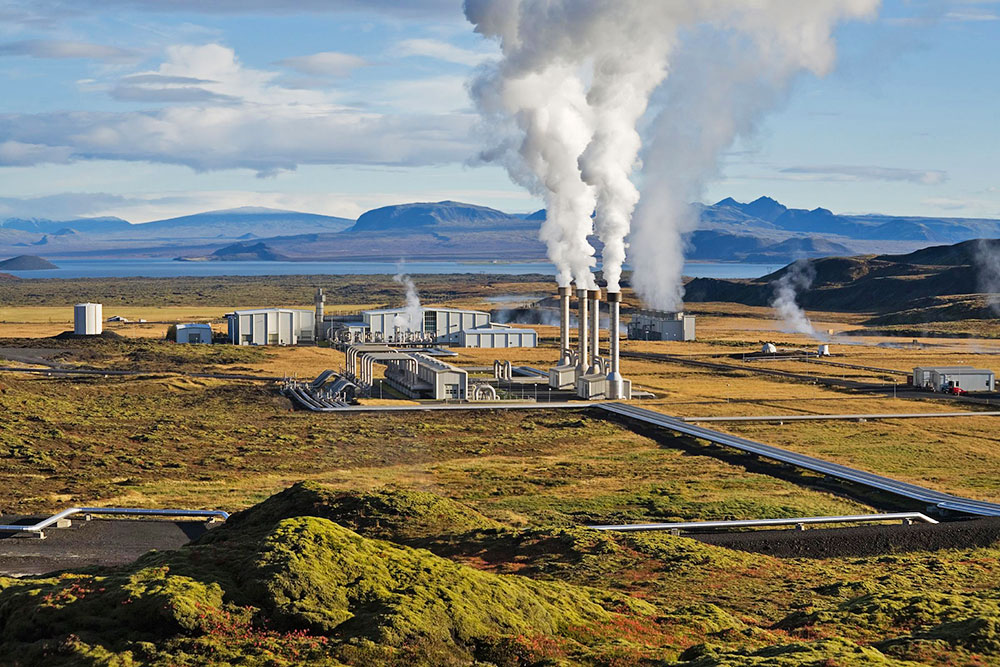
But they can also be harnessed for geothermal energy, a form of carbon-neutral power where pipes are placed in the Earth and channel steam upwards to turn turbines and generate electricity.
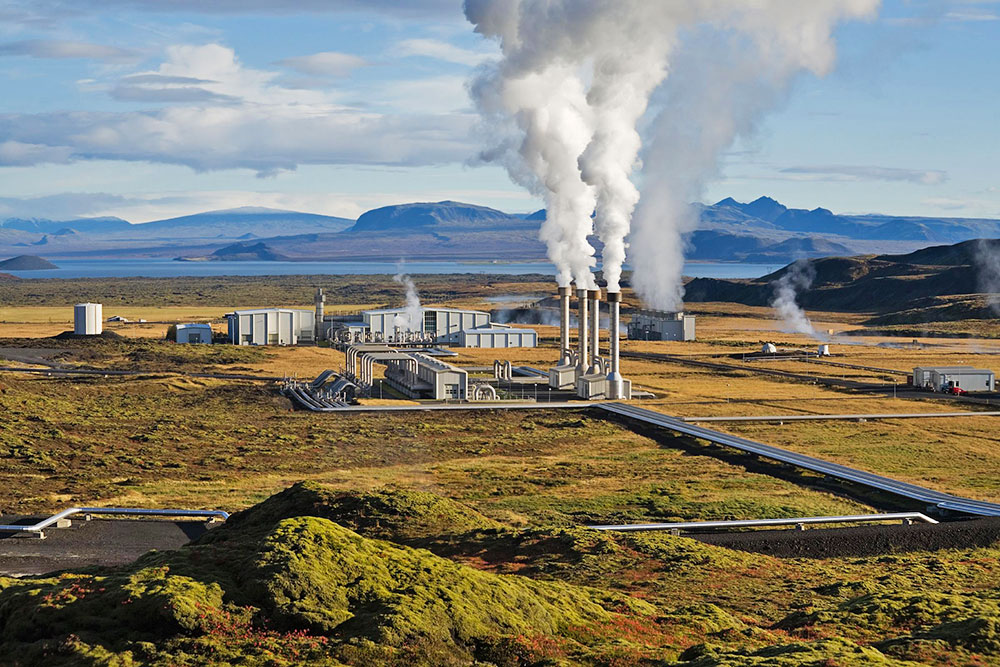
Steam rising from the Nesjavellir Geothermal Power Station in Iceland. Credit: Gretar Ívarsson/Fir0002
Download
In countries like,
Kenya
Iceland
New Zealand
the Philippines
Costa Rica
El Salvador
...geothermal power is responsible for providing a significant portion of the country's power supply - ranging from 14% in Costa Rica to 51% in Kenya.
In all cases, this is due to the countries being in and around active volcanic regions that allow for the presence of abundant geothermal fields.
But by far, the most beneficial aspect of volcanoes is the role they play in the formation of a planet's atmosphere.
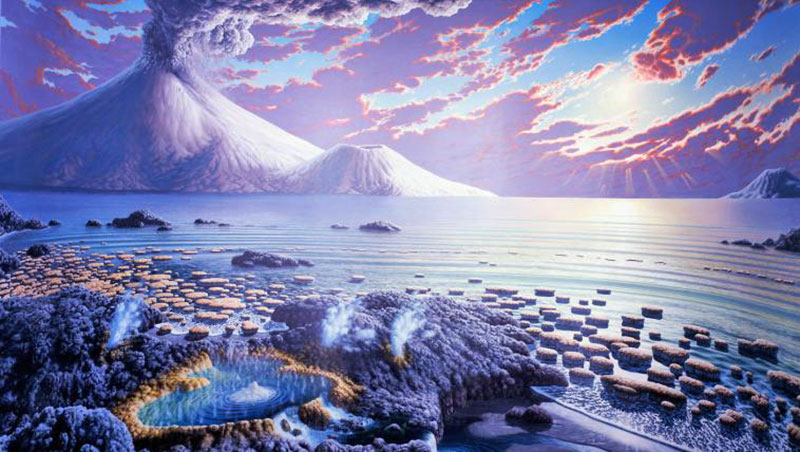
In short, Earth's atmosphere began to form after its formation 4.6 billion years ago, when volcanic outgassing led to the creation of gases stored in the Earth's interior to collect around the surface of the planet.
Initially, this atmosphere consisted of hydrogen sulfide, methane, and 10 to 200 times as much carbon dioxide as today's atmosphere.
After about half a billion years, Earth's surface cooled and solidified enough for water to collect on it. At this point, the atmosphere shifted to one composed of water vapor, carbon dioxide and ammonia (NH³).
Much of the carbon dioxide dissolved into the oceans, where cyanobacteria developed to consume it and release oxygen as a byproduct.
Meanwhile, the ammonia began to be broken down by photolysis, releasing the hydrogen into space and leaving the nitrogen behind.
Another key role played by volcanism occurred 2.5 billion years ago, during the boundary between the Archaean and Proterozoic Eras.
It was at this point that oxygen began to appear in our oxygen due to photosynthesis - which is referred to as the "Great Oxidation Event".
However, according to recent geological studies, biomarkers indicate that oxygen-producing cyanobacteria were releasing oxygen at the same levels there are today.
In short, the oxygen being produced had to be going somewhere for it not to appear in the atmosphere.
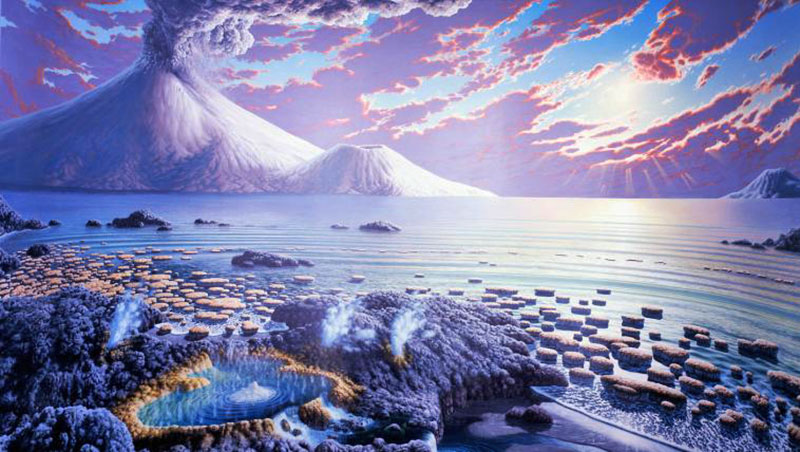
Roughly 2.5 billion years ago, towards the end of the Archaean Era, oxidation of our atmosphere began. Credit: ocean.si.edu
Download
The lack of terrestrial volcanoes is believed to be responsible.
During the Archaean Era, there were only submarine volcanoes, which had the effect of scrubbing oxygen from the atmosphere, binding it into oxygen containing minerals.
By the Archaean/Proterozoic boundary, stabilized continental land masses arose, leading to terrestrial volcanoes.
From this point onward, markers show that oxygen began appearing in the atmosphere.
Volcanism also plays a vital role in the atmospheres of other planets.
Mercury's thin exosphere of:
hydrogen
helium
oxygen
sodium
calcium
potassium
and water vapor is due in part of volcanism, which periodically replenishes it.
Venus' incredibly dense atmosphere is also believed to be periodically replenished by volcanoes on its surface.
And Io, Jupiter's volcanically active moon, has an extremely tenuous atmosphere of:
sulfur dioxide (SO²)
sulfur monoxide (SO)
sodium chloride (NaCl)
sulfur monoxide (SO)
atomic sulfur (S)
oxygen (O)
All of these gases are provided and replenished by the many hundreds of volcanoes situated across the moon's surface.
As you can see, volcanoes are actually a pretty creative force when all is said and done.
In fact, us terrestrial organisms depend on them for everything from the air we breathe, to the rich soil that produces our food, to the geological activity that gives rise to terrestrial renewal and biological diversity.